
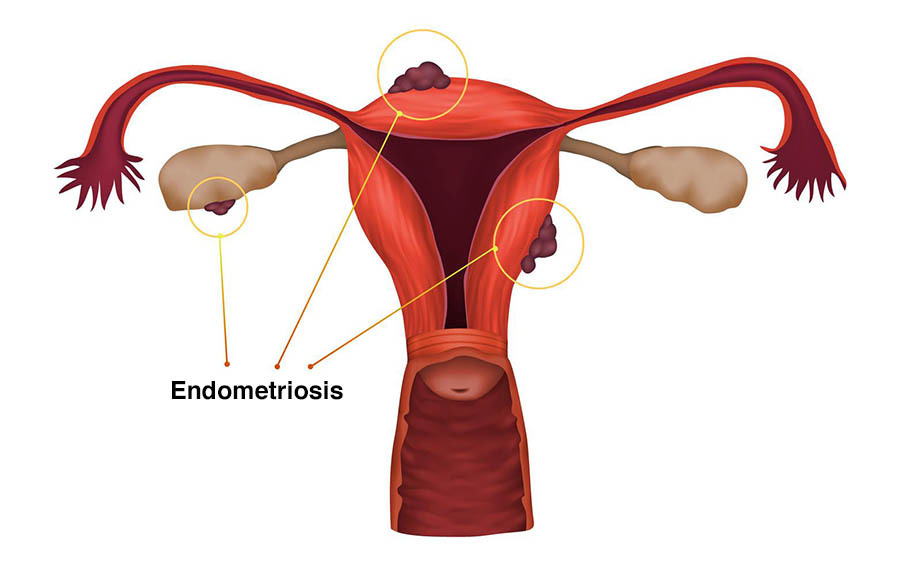
This is a condition where endometrial cells appear and grow outside the uterus. Endometriosis affects between 6 and 10 percent of women of reproductive age worldwide.
Estrogen levels during puberty are thought to trigger the symptoms therefore symptoms are generally present during the reproductive years.
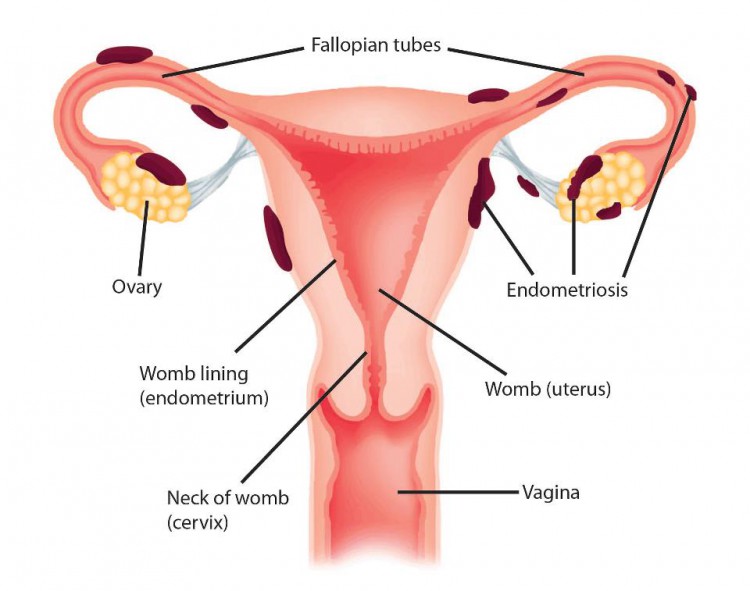
Parts that are mainly affected include
- the ovaries
- the Fallopian tubes
- the peritoneum
- the lymph nodes
Symptoms
Other medical conditions such as pelvic inflammatory disease (PID), ovarian cysts, and irritable bowel syndrome (IBS) can mimic the symptoms of endometriosis.
Symptoms of endometriosis include:
- Severe menstrual cramps, unrelieved with NSAIDS

- Long-term lower-back and pelvic pain

- Periods lasting longer than 7 days
- Heavy menstrual bleeding where the pad or tampon needs changing every 1 to 2 hours

- Bowel and urinary problems including pain, diarrhea, constipation, and bloating
- Bloody stool or urine
- Nausea and vomiting

- Pain during intercourse
- Spotting or bleeding between periods
In case of the above symptoms see a medical expert to avoid future complications.
Pain is the most common indication of endometriosis .The severity of the pain is not always an indicator of the seriousness of the condition.The pain reduces as one approaches menopause due to reduced production of estrogen hormone but if you are still on hormone treatment,the pain may persist.pain in affected women vary from month to month
Pain in women with endometriosis depends partly on where endometrial implants of endometriosis are located.
- Deeper implants and implants in areas of high nerve density are more apt to produce pain.
- The implants may also release substances into the bloodstream, which are capable of eliciting pain.
- Pain can result when endometriotic implants incite scarring of surrounding tissues.
some of the complications that come with the condition include
- inflammation
- infertility
- ovarian cyst
- increased risk of ovarian cancer
- scar tissue and adhesion development
- intestinal and bladder complications
RISKS
Any one can develop endometriosis ,but people with some risk factors stand a higher chance of developing the condition
- Menstrual history: Menses lasting more than 7 days or menstrual cycles of less than 27 days.
- Caffeine, alcohol consumption, and lack of exercise: These can raise levels of estrogen
- Age: It is most common in women aged 30 to 40 years
- Nulliparity: Never giving birth
- Genetics: One or more relatives having the condition
- Medical history: Having a pelvic infection, uterine abnormalities, or a condition that prevents expulsion of menstrual blood
DIAGNOSIS
Endometriosis has no single test for evaluation hence diagnosis is challenging. The only way to truly confirm the condition is by undergoing a surgical laparoscopy .This is a procedure in which a thin, lighted tube with a miniature camera attached, called a laparoscope, is inserted through a small incision in the pelvic area.Even with this procedure it can take a long time (even years) to get a diagnosis.other methods include
- a pelvic exam
- ultrasound
- magnetic resonance imaging
- use of birth control medications or gonadotropin releasing hormone (GnRH) agonists.
TREATMENT
There is currently no cure for endometriosis, most women are able to only relieve the pain of symptoms.some of the ways used to manage the pain include
Pain medications: this is taking non-steroidal anti-inflammatory drugs or prescription drugs for the treatment of painful menses.
Hormones: Treatment may be with hormonal therapies such as hormonal birth control.
Fertility treatment: Pregnancy may be recommended via in-vitro fertilization (IVF).
Surgery: Initial surgery will seek to remove the areas of endometriosis, but a hysterectomy with removal of both ovaries may be necessary.

A hysterectomy, or the removal of the uterus, will be considered when all other avenues of treatment have been exhausted.
The pain can also be managed by
- avoiding caffeine
- exercising eg walking reduces estrogen levels hence reducing pain and progress of the condition
- in case of symptoms,go for regular medical check ups.
CAUSES
The cause of endometriosis is not fully understood. but some of the possible explanations include.
Problems with menstrual flow: Menstrual blood enters the fallopian tubes and the pelvis instead of leaving the body in the usual way.
Embryonic cell growth: At times, embryonic cells lining the abdomen and pelvis develop into endometrial tissue within those cavities.
Fetal development: Data show that endometriosis can be present in a developing fetus, but pubertal estrogen levels are thought to trigger the symptoms.
Surgical scar: Endometrial cells can move during a procedure such as a hysterectomy or c-section.
Endometrial cell transport: The lymphatic system transports endometrial cells to various parts of the body.
Genetics: There may be an inherited component. A woman with a close family member who has endometriosis is more likely to develop endometriosis herself.
Hormones: Endometriosis is stimulated by the hormone estrogen.
Immune system: Problems with the immune system can prevent the destruction of extra-uterine endometrial tissue.

 HEALTH AND DRUGS